Greg Abel Directs $9.6 Billion in Berkshire Hathaway Share Buybacks
Berkshire Hathaway ramped up its capital deployment in the third quarter of 2026, with CEO Greg Abel directing $9.6 billion toward company share buybacks after a nearly two-year pause.
 💎Wealth Building
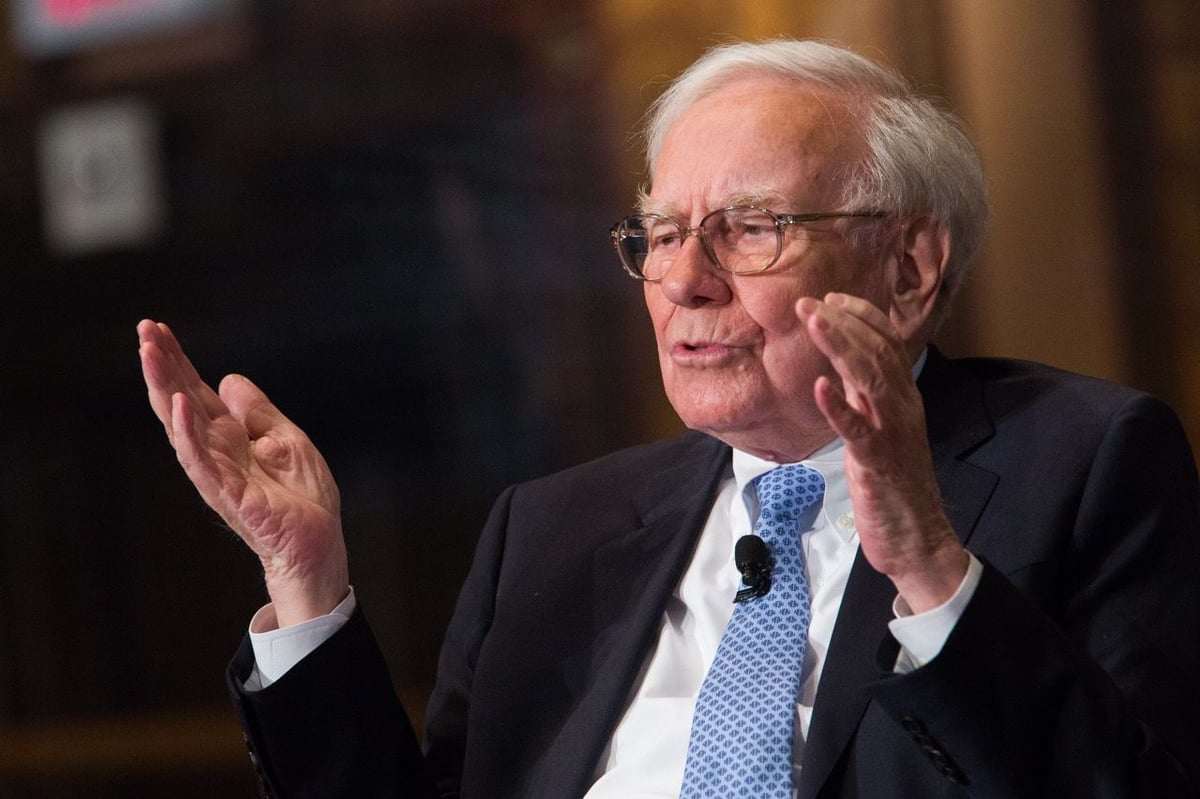
Photo: Motley Fool
Key points
- Berkshire Hathaway spent $9.6 billion on stock buybacks in Q3 2026.
- Total buybacks for 2026 reached $14.4 billion after a 22-month pause.
- Company cash reserves closed September at $377.4 billion.
Berkshire Hathaway more than doubled its stock repurchases in the third quarter of 2026, deploying $9.6 billion to buy back its own shares following a nearly 22-month pause in such activity. Under the leadership of CEO Greg Abel, the conglomerate acquired 4,536 Class A shares and 12,384,959 Class B shares between July 1 and September 30. This sharp acceleration brings Berkshire's total 2026 buybacks to $14.4 billion and shifts the company into a net buyer of equities with $11.2 billion in net purchases year-to-date, contrasting with net sales of $10.6 billion over the same period in 2025.
The heavy repurchase activity stems from valuation metrics rather than a change in core policy. Berkshire maintains a strict internal rule allowing buybacks indefinitely as long as its combined cash, cash equivalents, and U.S. Treasury bills remain above $30 billion—a threshold comfortably cleared by the $377.4 billion reported at the end of September. Furthermore, buybacks are green-lit only when shares trade at less than a 50% premium to book value. During the prior 21-month hiatus, the stock traded at a 60% to 80% premium, but recently cooled to a 40% to 50% premium over the preceding two quarters.
Because Berkshire Hathaway does not distribute a dividend, share repurchases serve as the primary mechanism to return value to shareholders while gradually increasing individual ownership stakes. By lowering the total count of outstanding shares, steady net income can translate into higher earnings per share over the long run, signaling to the broader market that leadership considers the equity undervalued.
What to do with this
Long-term investors reviewing corporate governance and capital allocation strategies can observe how large institutions manage liquidity and valuation thresholds. While individual retail investors should not attempt to time purchases based solely on corporate buyback announcements, monitoring cash reserves and management behavior provides useful context for evaluating stock stability and market valuations.
Watch next
- November 16, 2026: Filing deadline for Berkshire Hathaway's quarterly Form 13F.
- December 31, 2026: End of the current fiscal year for tracking full-year corporate capital deployment.
Source Motley Fool — fool.com/investing/2026/11/11/warren-buffett-successor-greg-abel-ju… ↗
Read next
 💳Credit & Cards
Southwest Airlines Offers Limited-Time Companion Pass Promotion Through November 29
Southwest Airlines is offering a temporary Companion Pass for travelers who book and complete specific flights before early 2027.
 🏦Banking & Loans
BlackRock Executive Advocates for 24/7 Financial Infrastructure
BlackRock's digital assets director says traditional businesses increasingly require around-the-clock financial systems. The firm is expanding its tokenized fund offering…
 📊Investing
Comparing Pfizer’s 6% Yield and AbbVie’s 53-Year Dividend Track Record
Investors are weighing the high dividend yield of Pfizer against the long-term dividend growth history of AbbVie to determine which pharmaceutical stock offers better val…
 💰Save & Budget
Evaluating Costco Shopping Value Versus Stock Valuation Ahead of Black Friday
Market analysis suggests that Costco's current stock price may be overvalued compared to the savings potential of its retail offerings.
 📊Investing
Universal Technical Institute Reports $897 Million Revenue Amid Campus Expansion Plans
Universal Technical Institute reported $897 million in full-year revenue for 2026, driven by high demand for skilled trades training. The company plans to increase capita…
 📉Economy
Bitcoin Price Drops Below $60,000 Following $6.8 Billion Options Expiry
Bitcoin's price dipped below $60,000 on Friday as a significant volume of options contracts expired, fueling ongoing market uncertainty.