Can Investors Still Use Warren Buffett's 19% Return Playbook Today?
Warren Buffett achieved average annual returns exceeding 19% over six decades at Berkshire Hathaway. Everyday investors can adapt his core principles or consider low-cost index funds for long-term growth.
 🧓Retirement & FIRE
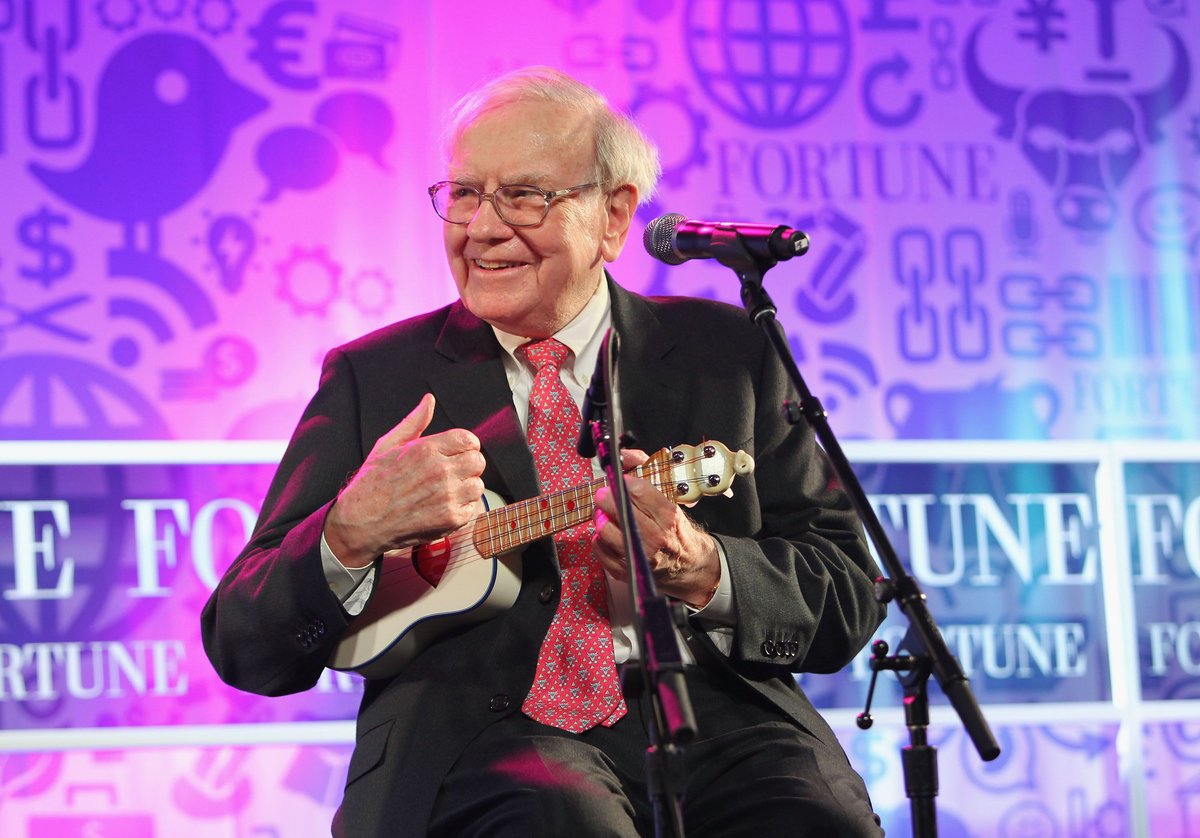
Photo: Motley Fool
Key points
- Warren Buffett achieved over 19% annualized returns across six decades.
- The core strategy involves buying predictable, understandable businesses with strong moats at fair prices.
- Low-cost index funds often outperform complex individual stock strategies for ordinary investors.
Warren Buffett delivered average annual returns of more than 19% over six decades as the head of Berkshire Hathaway, nearly doubling the roughly 10% return of the S&P 500, according to historical data. While replicating these exact results remains exceptionally difficult—as proven by professional hedge funds that lost a famous ten-year bet to a low-cost index fund—household investors can still learn valuable lessons from the Oracle of Omaha's long-term strategy.
Buffett's core approach centers on buying shares of straightforward businesses with strong market moats at attractive prices and holding them for the long haul. He focuses primarily on simple operations with steady cash flows that he understands well, while avoiding complex sectors like technology. By taking a long-term view, investors can benefit from tax advantages and reduce the impulse to panic-sell during short-term market volatility, echoing his mentor Benjamin Graham's view that the market acts as a weighing machine over time.
For individuals who prefer individual stock picking, applying this playbook means prioritizing well-understood businesses, checking for sustainable competitive advantages, paying close attention to valuation, and staying the course through bear markets. However, for many savers and retirees looking to build wealth with minimal research and low fees, purchasing broad market index funds—such as the Vanguard S&P 500 ETF, which carries a 0.03% expense ratio—often serves as a more practical option.
What to do with this
Savers and long-term investors can evaluate their portfolios to see if low-cost index funds align better with their goals than picking individual stocks, while those who prefer single equities should focus on stable companies with clear competitive advantages and fair valuations.
Watch next
- Monitor broader stock market index performance and quarterly economic data releases.
- Review personal retirement contribution limits and portfolio asset allocations ahead of upcoming tax year deadlines.
Source Motley Fool — fool.com/investing/2026/11/14/warren-buffetts-berkshire-compounded-… ↗
Read next
 💳Credit & Cards
Southwest Airlines Offers Limited-Time Companion Pass Promotion Through November 29
Southwest Airlines is offering a temporary Companion Pass for travelers who book and complete specific flights before early 2027.
 💎Wealth Building
Gaotu Techedu Reports First GAAP Operating Profit in Q3 2026
Gaotu Techedu achieved its first positive operating income under GAAP standards during the third quarter of 2026, signaling a shift toward sustainable profitability.
 🏦Banking & Loans
BlackRock Executive Advocates for 24/7 Financial Infrastructure
BlackRock's digital assets director says traditional businesses increasingly require around-the-clock financial systems. The firm is expanding its tokenized fund offering…
 📊Investing
Comparing Pfizer’s 6% Yield and AbbVie’s 53-Year Dividend Track Record
Investors are weighing the high dividend yield of Pfizer against the long-term dividend growth history of AbbVie to determine which pharmaceutical stock offers better val…
 💰Save & Budget
Evaluating Costco Shopping Value Versus Stock Valuation Ahead of Black Friday
Market analysis suggests that Costco's current stock price may be overvalued compared to the savings potential of its retail offerings.
📊InvestingUniversal Technical Institute Reports $897 Million Revenue Amid Campus Expansion Plans
Universal Technical Institute reported $897 million in full-year revenue for 2026, driven by high demand for skilled trades training. The company plans to increase capita…