Berkshire Hathaway Spent $9.6 Billion on Share Buybacks in the Third Quarter
Berkshire Hathaway deployed $9.6 billion toward share buybacks during the third quarter under CEO Greg Abel, following a strategy long favored by Warren Buffett.
 📊Investing
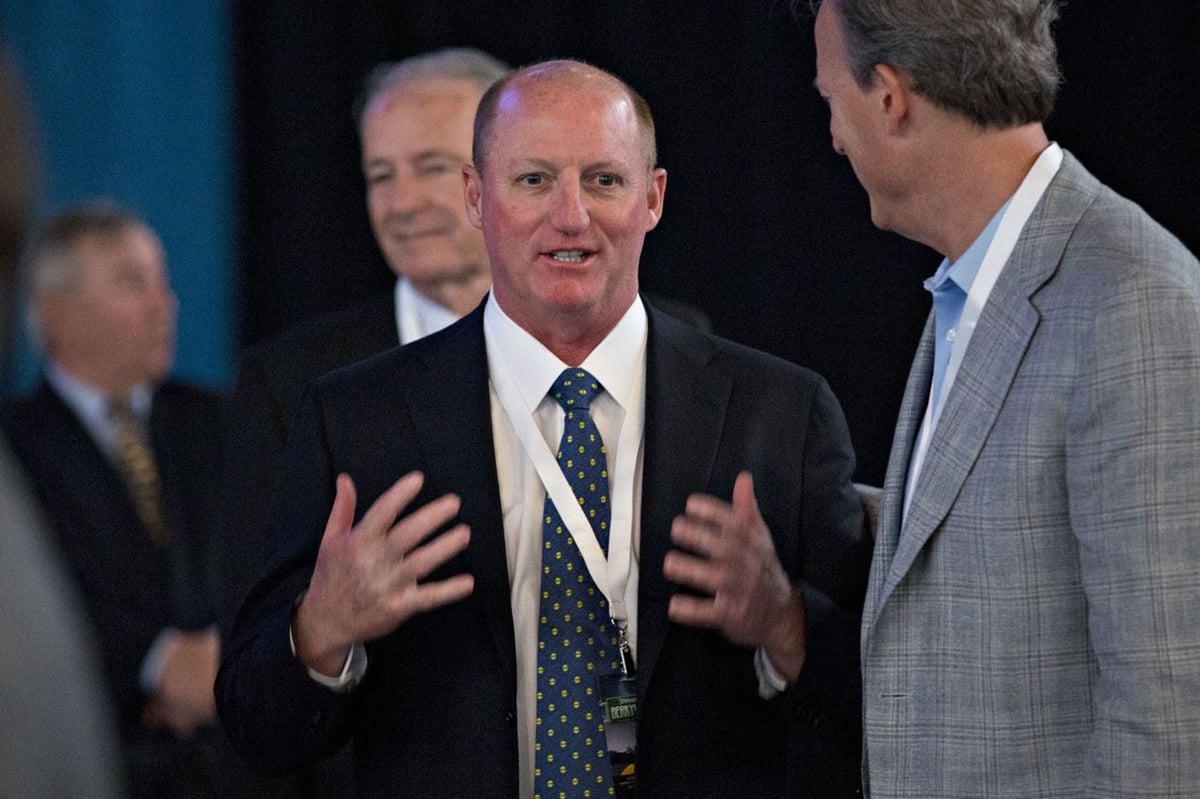
Photo: Motley Fool
Key points
- Berkshire Hathaway allocated $9.6 billion to share buybacks in the third quarter.
- Greg Abel continues capital allocation strategies established by former CEO Warren Buffett.
- Independent estimates suggest the conglomerate may be slightly undervalued by 8% to 10%.
Berkshire Hathaway spent $9.6 billion buying back its own shares during the third quarter, marking a continuation of a core policy under new CEO Greg Abel. Abel took the helm at the beginning of the year after Warren Buffett stepped down, and corporate leadership has maintained that foundational company values remain unchanged. While market observers often associate Buffett with massive public equity holdings like Apple, the conglomerate has historically spent more capital purchasing its own stock over the past decade than any other single equity.
Large-scale share buybacks generally indicate that executive leadership views the company's shares as undervalued relative to its broader growth potential. By reducing the pool of total outstanding shares, buybacks can increase the intrinsic value per share, assuming the company is not paying an inflated price. Independent calculations suggest Berkshire Hathaway may currently trade at an approximate 8% to 10% discount to its intrinsic value, depending on the earnings multiples applied to its diverse business segments.
Beyond capital allocation strategy, the conglomerate offers a diversified structure that can act as a hedge against broader macroeconomic uncertainty, geopolitical concerns, and potential corrections in overvalued technology sectors. While the company maintains some exposure to artificial intelligence through its public equity holdings like Alphabet, its sprawling operations span multiple industries that react differently to economic cycles.
What to do with this
Long-term investors reviewing individual stock allocations can evaluate how large corporate buybacks impact intrinsic value per share and overall portfolio diversification. Rather than replicating corporate transactions blindly, retail investors should assess whether a company's underlying business segments align with their personal risk tolerance and financial goals during periods of market volatility.
Watch next
- The release of Berkshire Hathaway's next quarterly earnings report detailing capital allocation and buyback updates.
- Broader market data releases regarding macroeconomic inflation and interest rate decisions that influence equity valuations.
Source Motley Fool — fool.com/investing/2026/11/27/berkshire-hathaway-s-ceo-greg-abel-ju… ↗
Read next
 💰Save & Budget
Evaluating Costco Shopping Value Versus Stock Valuation Ahead of Black Friday
Market analysis suggests that Costco's current stock price may be overvalued compared to the savings potential of its retail offerings.
 📉Economy
Bitcoin Price Drops Below $60,000 Following $6.8 Billion Options Expiry
Bitcoin's price dipped below $60,000 on Friday as a significant volume of options contracts expired, fueling ongoing market uncertainty.
 🧾Taxes
Bitcoin Whales Accumulate 121,000 BTC Despite Declining Profit Margins
Large Bitcoin holders are bucking historical trends by accumulating over 121,000 BTC in the fourth quarter, even as realized losses mount and profit margins hit multi-yea…
 📉Economy
Arthur Hayes Warns of Crypto Volatility Ahead of Federal Reserve Blackout
Arthur Hayes suggests cryptocurrency markets may face weekend volatility due to the upcoming Federal Reserve policy quiet period. Analysts remain divided on whether Bitco…
 🪙Crypto Basics
PrimeXBT Integrates TradingView to Streamline Crypto Market Analysis and Execution
PrimeXBT has integrated with the TradingView platform, allowing users to perform technical analysis and execute trades across crypto and traditional assets from a single …
 🧓Retirement & FIRE
Taiwan Semiconductor Manufacturing Company Holds 75% Global Pure-Play Market Share
Taiwan Semiconductor Manufacturing Company (TSMC) maintains its dominant position in the global semiconductor industry with a 75% market share.