Why the 2026 Midterms Matter Less for Long-Term Portfolios Than You Think
Following the 2026 midterm elections, historical data shows that broad economic trends and corporate earnings drive market performance far more than political shifts.
 📉Economy
Photo: Motley Fool
Key points
- Elections have minimal medium- to long-term impact on overall market returns compared to inflation and economic growth.
- Historical data shows the S&P 500 yields positive returns in nearly 100% of rolling 10-year holding periods.
- Markets often price in anticipated regulatory and political shifts before election outcomes are fully realized.
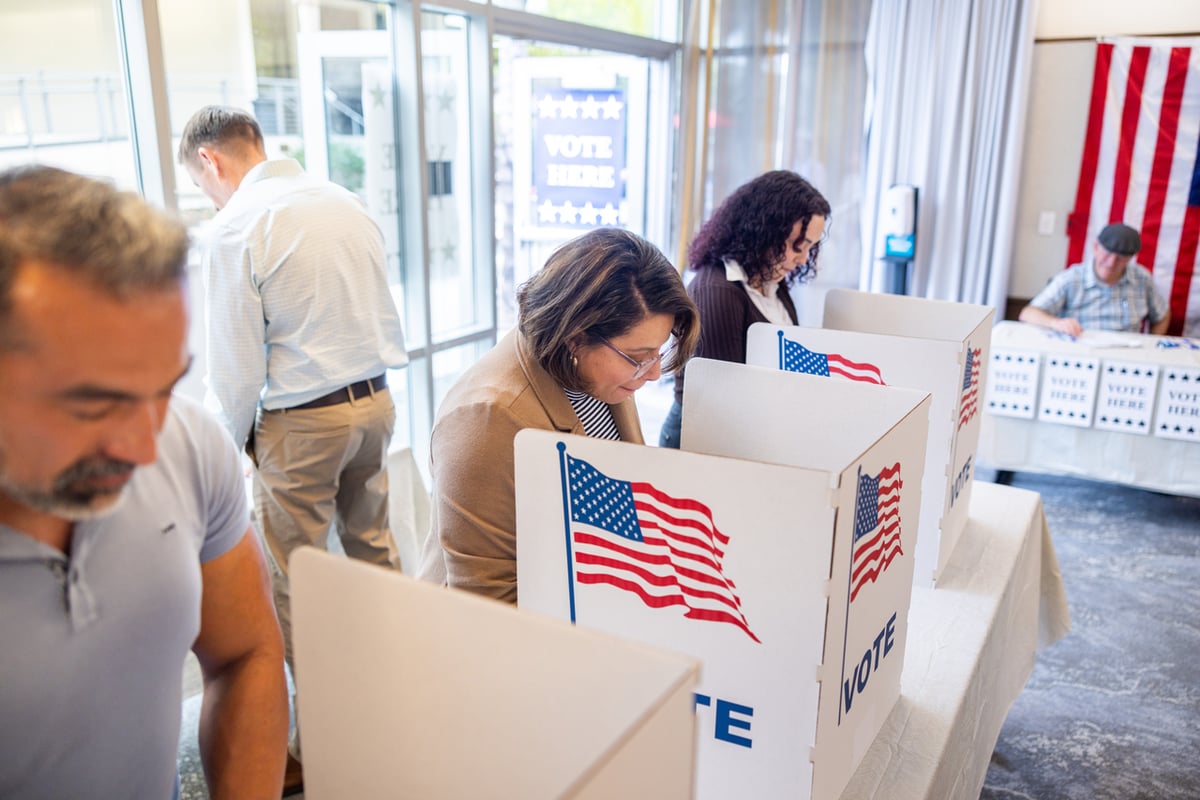
Following the 2026 midterm elections, which delivered a sweeping victory for the Democratic Party and control of the U.S. House and Senate by strong margins, investors are weighing the impact of incoming policy changes. While the winning party can enact new taxes, regulations, or spending incentives that alter the trajectory of specific sectors like artificial intelligence and semiconductors, broader financial markets typically look past short-term political shifts.
Research published by U.S. Bancorp in 2024 indicates that elections have a minimal medium- to long-term impact on financial market performance compared to overarching economic and inflation trends. Over the past 98 years since 1928, the S&P 500 has posted positive one-year returns in 72 of those years, according to historical data compiled by Capital Group. Furthermore, holding the S&P 500 increases historical odds of a positive return to 88% over a three-year period, 93% over five years, and nearly 100% over a decade.
For investors experiencing anxiety about shifting political winds, the market may have already priced in anticipated regulatory outcomes. Major funds, such as the Vanguard S&P 500 ETF, have historically recorded annualized returns of about 12% over the past five years and 15.5% over the past decade, demonstrating the resilience of a consistent, long-term approach.
What to do with this
Long-term investors can consider sticking to their regular buying schedules and maintaining a diversified asset mix rather than making drastic portfolio changes based on election outcomes. Savers or investors experiencing significant anxiety might evaluate adding bonds to de-risk their holdings, provided their time horizon supports it.
Watch next
- The next 24 months leading up to the 2028 presidential elections
- Upcoming U.S. economic and inflation data releases affecting market returns
Source Motley Fool — fool.com/investing/2026/11/12/2-years-until-next-election-long-term… ↗
Read next
 💳Credit & Cards
Southwest Airlines Offers Limited-Time Companion Pass Promotion Through November 29
Southwest Airlines is offering a temporary Companion Pass for travelers who book and complete specific flights before early 2027.
 💎Wealth Building
Gaotu Techedu Reports First GAAP Operating Profit in Q3 2026
Gaotu Techedu achieved its first positive operating income under GAAP standards during the third quarter of 2026, signaling a shift toward sustainable profitability.
 🏦Banking & Loans
BlackRock Executive Advocates for 24/7 Financial Infrastructure
BlackRock's digital assets director says traditional businesses increasingly require around-the-clock financial systems. The firm is expanding its tokenized fund offering…
 📊Investing
Comparing Pfizer’s 6% Yield and AbbVie’s 53-Year Dividend Track Record
Investors are weighing the high dividend yield of Pfizer against the long-term dividend growth history of AbbVie to determine which pharmaceutical stock offers better val…
 💰Save & Budget
Evaluating Costco Shopping Value Versus Stock Valuation Ahead of Black Friday
Market analysis suggests that Costco's current stock price may be overvalued compared to the savings potential of its retail offerings.
📊InvestingUniversal Technical Institute Reports $897 Million Revenue Amid Campus Expansion Plans
Universal Technical Institute reported $897 million in full-year revenue for 2026, driven by high demand for skilled trades training. The company plans to increase capita…