Apec Summit Focuses on Trade and Tariffs as Leaders Convene in Asia
World leaders are gathering in Asia for a series of summits to discuss global trade, technology, and regional security. The meetings are expected to address concerns over potential tariff shifts and supply chain stability.
 📉Economy
Photo: Guardian Business
Key points
- Apec member nations represent over 60% of the global economy.
- Regional integration is being prioritized by Southeast Asian nations to hedge against US tariff uncertainty.
- Key agenda items include AI governance, green energy transitions, and trade tariff adjustments.
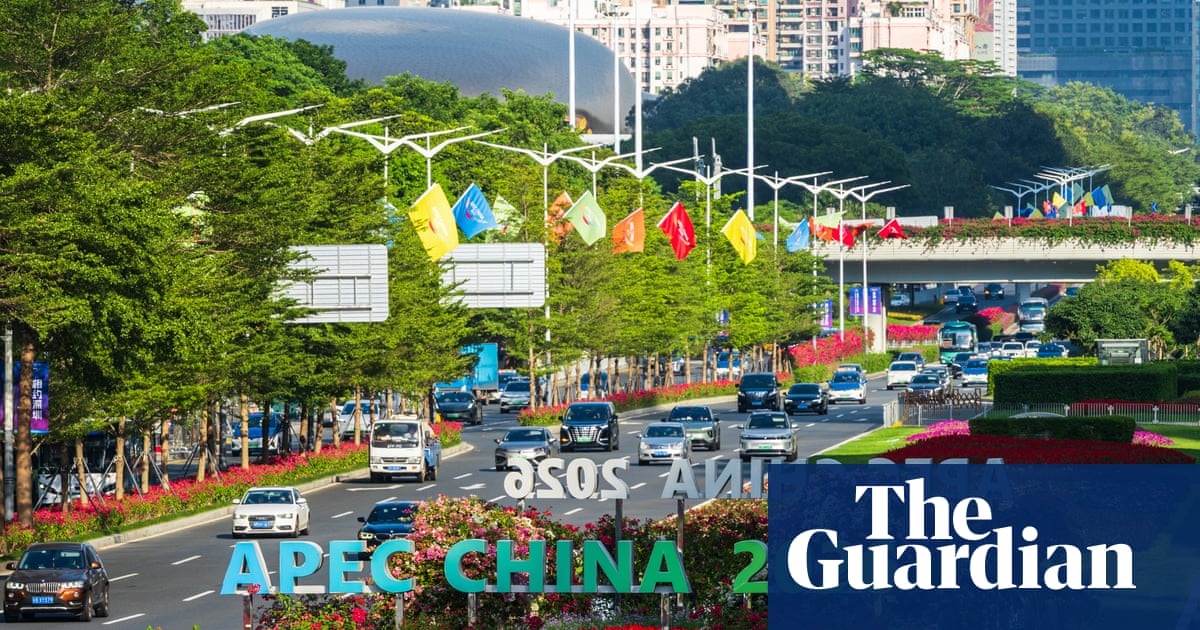
Global leaders are converging in Asia this week for a series of high-level diplomatic summits, including the Asia-Pacific Economic Cooperation (Apec) meeting in Shenzhen. Representing over 60% of global GDP, these gatherings will address critical economic issues such as AI supply chain governance, tariff reductions, and the transition to green energy.
Economic analysts suggest that regional nations are increasingly focused on diversifying their trade partnerships to mitigate risks associated with potential US tariff policies. Jayant Menon of the Iseas-Yusof Ishak Institute noted that Southeast Asian countries are prioritizing deeper regional integration and expanding trade beyond the United States to build resilience against persistent economic uncertainty.
The summits, which also include the Asean meeting in the Philippines and a Francophone gathering in Cambodia, serve as a platform for superpowers to navigate trade influence. While the discussions involve complex geopolitical security issues, the primary focus for many participating nations remains the stability of trade routes and the preservation of economic growth in an era of shifting alliances.
What to do with this
For individuals and businesses with international exposure, monitoring these summits is essential as policy shifts regarding tariffs and trade agreements can directly impact the cost of imported goods and the stability of global supply chains. Investors may consider reviewing their portfolio diversification to ensure exposure is not overly concentrated in regions vulnerable to sudden trade policy changes, while savers should remain aware of how global economic volatility might influence interest rates and currency fluctuations.
Watch next
- November 13: Apec summit commencement in Shenzhen
- November 10: Asean meeting initiation in the Philippines
Source Guardian Business — theguardian.com/world/2026/nov/15/asia-diplomatic-summits-trump-xi-… ↗
Read next
 💳Credit & Cards
Southwest Airlines Offers Limited-Time Companion Pass Promotion Through November 29
Southwest Airlines is offering a temporary Companion Pass for travelers who book and complete specific flights before early 2027.
 💎Wealth Building
Gaotu Techedu Reports First GAAP Operating Profit in Q3 2026
Gaotu Techedu achieved its first positive operating income under GAAP standards during the third quarter of 2026, signaling a shift toward sustainable profitability.
 🏦Banking & Loans
BlackRock Executive Advocates for 24/7 Financial Infrastructure
BlackRock's digital assets director says traditional businesses increasingly require around-the-clock financial systems. The firm is expanding its tokenized fund offering…
 📊Investing
Comparing Pfizer’s 6% Yield and AbbVie’s 53-Year Dividend Track Record
Investors are weighing the high dividend yield of Pfizer against the long-term dividend growth history of AbbVie to determine which pharmaceutical stock offers better val…
 💰Save & Budget
Evaluating Costco Shopping Value Versus Stock Valuation Ahead of Black Friday
Market analysis suggests that Costco's current stock price may be overvalued compared to the savings potential of its retail offerings.
📊InvestingUniversal Technical Institute Reports $897 Million Revenue Amid Campus Expansion Plans
Universal Technical Institute reported $897 million in full-year revenue for 2026, driven by high demand for skilled trades training. The company plans to increase capita…