American Airlines Ends International First Class, Leaving No US Carrier Offering It
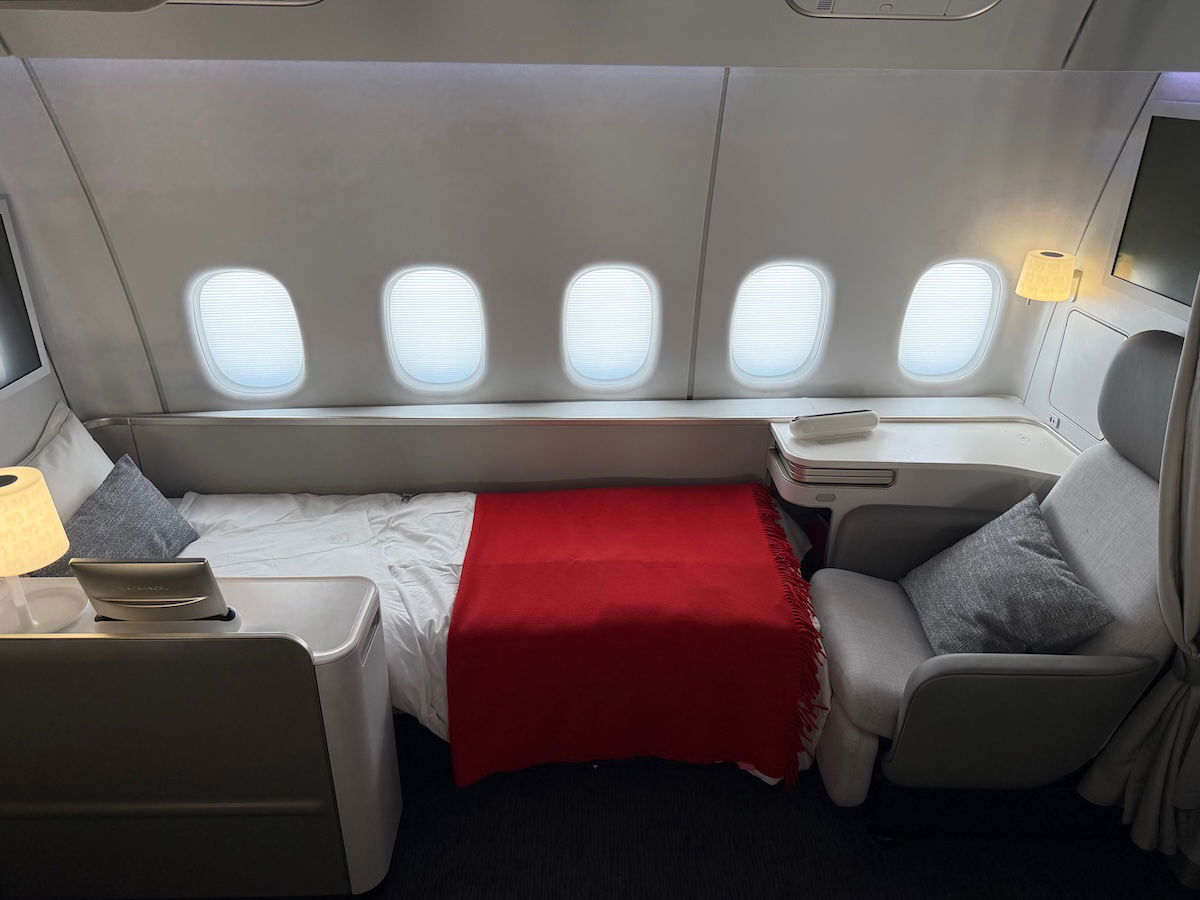
American Airlines has officially retired its Boeing 777 first-class cabin, marking the final departure of dedicated international first-class service from all United States-based airlines.
 🏦Banking & Loans
Photo: One Mile at a Time
Key points
- American Airlines has retired its final international first-class cabin.
- No US-based airline currently offers a dedicated international first-class product.
- Foreign carriers continue to successfully market first class to US-based high-net-worth travelers.
The retirement of American Airlines' flagship first-class cabin signals the end of an era for domestic carriers, which historically pioneered premium air travel. While US airlines continue to market themselves as premium brands, the decision to eliminate international first-class seating leaves them without a top-tier product to compete with international rivals like Air France or Singapore Airlines.
The shift highlights a long-standing disconnect between US carriers and the ultra-wealthy market. While international airlines successfully target affluent American travelers with high-end, boutique first-class experiences, US carriers have historically struggled to monetize the cabin. Industry analysts suggest this failure stems from a legacy of treating first class as an "upgrade class" rather than a distinct, high-value product worth paying for.
Despite the trend toward business-class-only international cabins, some argue that a boutique first-class experience could still be viable for US airlines. By reducing economy capacity and focusing on exclusive, high-service offerings, carriers could potentially capture the significant demand from the world's most lucrative customer base, which currently opts for private aviation or foreign carriers instead.
What to do with this
Travelers looking to maximize the value of their airline loyalty programs or credit card points should recognize that the "first-class" experience on US carriers is now effectively limited to domestic routes or international business class. Those seeking true luxury international travel may need to shift their loyalty to foreign partner airlines that maintain dedicated first-class cabins, often accessible through international airline alliances and point transfers.
Watch next
- Future announcements regarding new business-class suite configurations on long-haul US aircraft.
- Quarterly earnings reports from major US carriers detailing the profitability of their premium cabin strategies.
Source One Mile at a Time — onemileatatime.com/insights/international-first-class-failed-us-airline… ↗
Read next
 💳Credit & Cards
Southwest Airlines Offers Limited-Time Companion Pass Promotion Through November 29
Southwest Airlines is offering a temporary Companion Pass for travelers who book and complete specific flights before early 2027.
 💎Wealth Building
Gaotu Techedu Reports First GAAP Operating Profit in Q3 2026
Gaotu Techedu achieved its first positive operating income under GAAP standards during the third quarter of 2026, signaling a shift toward sustainable profitability.
 📊Investing
Comparing Pfizer’s 6% Yield and AbbVie’s 53-Year Dividend Track Record
Investors are weighing the high dividend yield of Pfizer against the long-term dividend growth history of AbbVie to determine which pharmaceutical stock offers better val…
 💰Save & Budget
Evaluating Costco Shopping Value Versus Stock Valuation Ahead of Black Friday
Market analysis suggests that Costco's current stock price may be overvalued compared to the savings potential of its retail offerings.
📊InvestingUniversal Technical Institute Reports $897 Million Revenue Amid Campus Expansion Plans
Universal Technical Institute reported $897 million in full-year revenue for 2026, driven by high demand for skilled trades training. The company plans to increase capita…
 📉Economy
Bitcoin Price Drops Below $60,000 Following $6.8 Billion Options Expiry
Bitcoin's price dipped below $60,000 on Friday as a significant volume of options contracts expired, fueling ongoing market uncertainty.