Check Your Bank's Savings Withdrawal Rules as Federal Limits Remain Gone
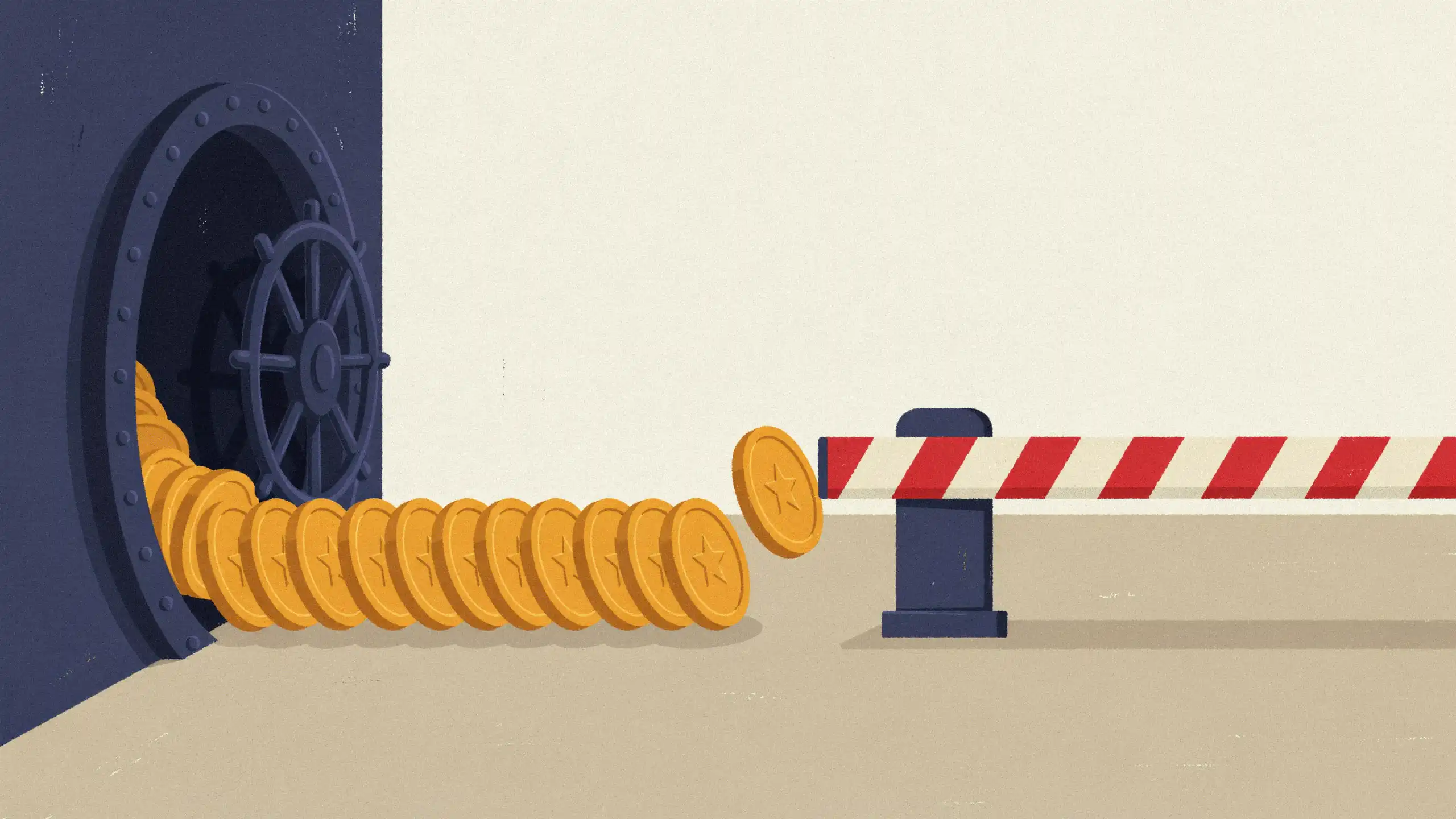
Although the federal six-withdrawal limit on savings accounts ended in April 2020, individual financial institutions continue to enforce their own transfer caps and penalties.
 🏦Banking & Loans
Photo: Money Crashers
Key points
- Federal limit of six monthly savings withdrawals ended in April 2020
- Banks now set their own individual limits, fees, and penalties
- Policies vary widely from non-enforcement to per-transfer fees and account closures
While federal regulations no longer restrict savings account withdrawals to six per month, individual banks retain the authority to set their own limits, fees, and account closure policies. Under former Federal Reserve rules known as Regulation D, accounts permitting more than six convenient transfers monthly were classified as transaction accounts, requiring banks to hold reserves. When the Fed reduced reserve requirements to zero in March 2020, that distinction disappeared, leaving institutions to determine their own policies.
Major financial institutions currently handle these restrictions in vastly different ways. Capital One lists a six-transfer limit on its 360 Performance Savings account terms but currently does not enforce it. Chase Savings assesses a five-dollar fee for each transfer or withdrawal exceeding six per monthly cycle, up to fifteen dollars total per period. Meanwhile, Ally limits online and mobile transfers out of savings to ten per cycle; while it charges no over-limit fees, it closes accounts for customers who repeatedly exceed the cap.
Account holders should review their specific bank agreements or fee schedules to understand which transactions count toward these limits. While older federal rules exempted ATM, teller, and mail withdrawals, modern institutional policies vary significantly regarding which specific actions trigger fees or penalties.
What to do with this
Savers and depositors should examine their current bank account agreements to identify specific transfer limits, fee structures, and penalized transaction types. To avoid unexpected charges, consumers can reroute all recurring bills and automatic payments to a checking account, then fund those obligations using fewer, larger periodic transfers out of savings.
Watch next
- Review your monthly bank statements for any new fee disclosures regarding savings transfer limits.
- Check your specific bank's fee schedule for updates on transaction limits or account closure policies.
Source Money Crashers — moneycrashers.com/savings-withdrawal-limits/ ↗
Read next
 💳Credit & Cards
Southwest Airlines Offers Limited-Time Companion Pass Promotion Through November 29
Southwest Airlines is offering a temporary Companion Pass for travelers who book and complete specific flights before early 2027.
 💎Wealth Building
Gaotu Techedu Reports First GAAP Operating Profit in Q3 2026
Gaotu Techedu achieved its first positive operating income under GAAP standards during the third quarter of 2026, signaling a shift toward sustainable profitability.
 📊Investing
Comparing Pfizer’s 6% Yield and AbbVie’s 53-Year Dividend Track Record
Investors are weighing the high dividend yield of Pfizer against the long-term dividend growth history of AbbVie to determine which pharmaceutical stock offers better val…
 💰Save & Budget
Evaluating Costco Shopping Value Versus Stock Valuation Ahead of Black Friday
Market analysis suggests that Costco's current stock price may be overvalued compared to the savings potential of its retail offerings.
📊InvestingUniversal Technical Institute Reports $897 Million Revenue Amid Campus Expansion Plans
Universal Technical Institute reported $897 million in full-year revenue for 2026, driven by high demand for skilled trades training. The company plans to increase capita…
 📉Economy
Bitcoin Price Drops Below $60,000 Following $6.8 Billion Options Expiry
Bitcoin's price dipped below $60,000 on Friday as a significant volume of options contracts expired, fueling ongoing market uncertainty.